Sunday, September 10, 2006

Hinduism and Transforming Feelings


After reading my post on transforming feelings, one might question, "Why is so much emphasis placed on knowing one's feelings and thoughts so intimately?" I've been reading the Bhagavad-Gita, an important book in Hindu religious literature, and came across this verse:
Thinking about sense-objects
Will attach you to sense-objects;
Grow attached, and you become addicted;
Thwart your addiction, it turns to anger;
Be angry, and you confuse your mind;
Confuse your mind, you forget the lesson of experience;
Forget experience, you lose discrimination;
Lose discrimination, and you miss life's only purpose. [1]

This verse traces through the effects of attachment, within which feelings play a primary role. Ignore, for a moment, the final step about missing life's only purpose, and consider the rest of the process. Choose any cherished possesion of yours. Think about it for a moment, then imagine you lost it. What permeates your mind upon losing the item? If you look sufficiently closely, you'll find at least a twinge of anger. It's easy to see that in any state of anger, your mind does not think clearly, awash in emotion. The rest of the verse follows clearly from here.

Looking closely at this process, where can we short-circuit it? Once your mind has reached a non-rational, confused state, it's too late, and your challenge is to plug the dam and regain your sensibilities before you do harm. We also cannot just stop thinking about sense objects. That's like telling someone with a powerful fear of snakes to hold a python for a minute and not be scared. Just as phobias are so deeply ingrained in our minds, thinking about sense objects in a manner that leads to attachment is also so ingrained.

Where does that leave us? At feelings. The initial impulse of feeling response indicates to us that the process is underway, and at this point, it is not yet so strong as to end our ability to discriminate. Of course, this won't be easy either, but it is the only link in the chain with which we can truly work directly. And working with such, we can stop the process from overwhelming us. The bonus is that as we work to discover the true nature of our feelings and their causes, we begin to see the attachment for what it is, and learn to deal with those opening links in the process indirectly through the gateway of feelings.


[1] Bhagavad-Gita. Translated by Swami Prabhavananda and Christopher Isherwood. 2002.


Friday, September 08, 2006

Exploration of Compassion in a World of Violence


This essay is an exploration of how love and compassion can survive and prosper in a world where violence is prevalent and accepted.

I am a relative pacifist. So I often question, "Do we even need violence? Can we live without violence? Should we, given our animal-nature?"

Most people would agree that love and compassion should be shown in most situations. But what about in an Israel-Lebanon type scenario? Hezbollah kidnaps 2 of your soldiers, how do you respond? Are peaceful, compassionate protests and negotiations viable? Or does that just encourage further incursions?

In Tibet, the Dalai Lama has always forbidden violent protests or responses to China's occupation. No further "expansion" has come of this, but is that because the rest of the world would violently oppose further takeovers by China? Or is China actually content with Tibet, and the Dalai Lama's response has maintained peace where otherwise there could have been bloodshed?

I read a story recently where a Buddhist monk was held captive in a prison in Tibet, where he was beaten and tortured, kept hungry and alone. This monk fled Tibet for India, where he met with the Dalai Lama. The Dalai Lama asked him, "Was there ever a time you felt your life was truly in danger?" The monk answered, "In truth, the only time I truly felt at risk was when I felt in danger of losing compassion for my jailers." That, to me, is the most heroic modern story I have ever heard. But if we had a majority of people committed to compassion like this Buddhist monk, would they be overcome by those who would take advantage of them?

This makes for an interesting paradox. Christ called for a turning of our other cheek, the Buddha instructed us not to harm other beings; but if we do this, will militant, extremist factions attack us out of their own misguided self-interest? Yet these great sages were the most wise people who ever lived, and we put great faith in their teachings. We must at least consider their advice.

So what is the answer? I don't think there is an absolute, correct answer to this dilemma. Dogmatic, doctrinal answers fail us here, as they do everywhere. We must apply wisdom to, and account for the practical parameters of, the situation. Our great sages' calls for peace and love and compassion form the ultimate path, the one we try our hardest to follow. But in our current world, many extremists may take this as an invitation to further their own self-interests, territorial and cultural, uncontested. Hence, I think that violent response remains a necessity in our current world. However, that being said, I applaud the great calls for peace, the protests, and the political movements to end war and violence, because to move toward the perfect path of peace expressed by our saints, we need to apply constant pressure on our governments to end hostilities.

For example, consider Iraq. An immediate, complete withdrawal of troops would be foolhardy, as Iraq would likely plunge into civil war. However, groups are right to call for such immediate action, to keep applying pressure to end violence. It is like walking up a down-escalator. Human violence carries us down, but we need to always be walking up, lest we collapse into a hellish state where chaotic violence is the only rule. Sometimes we may slow our walk and hence drift down slowly. But as long as we increase our pace often enough, we can continue making progress toward a life of compassion and turning our other cheek.


New Member of the Daily Scribe


Please pay a visit to the Daily Scribe, an aggregator of religious blogs across many traditions. I'm proud to join Will at thinkBuddha and Gareth at Green Clouds in the Buddhism Channel. There are many great blogs here, so please check it out!


Technorati Tags:

Tuesday, September 05, 2006

Synthesis versus Reductionist


True understanding comes not from looking at, but from looking in. Science is often touted as our way of understanding the world around us. But is it really?

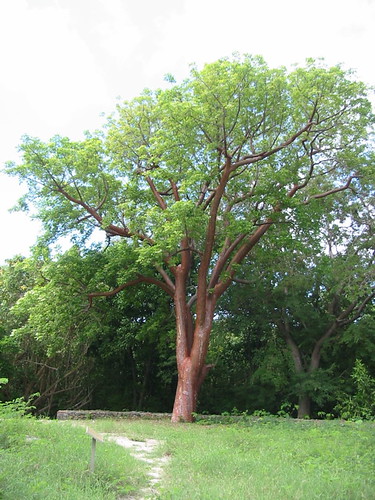
Science is reductionist. If a botanist wants to understand a tree, she analyzes the parts of the tree in isolation, the process of photosynthesis, the pattern, shape, and degree of root growth, the hydraulic system of water dispersal from roots to leaves. This undoubtedly leads to a great deal of understanding of how trees "work." But does this botanist really understand this particular tree? I don't think so. The reductionist, scientific approach, while powerful, is incapable of forging an understanding of the composite whole. Science "divides and conquers" wonderfully, but synthesizes poorly.

Poets, artists, writers—these people give us a real understanding of our world by creating a gateway through which we identify and merge with the artist's subject. We play our own role in this process as well. If you want to get to know a particular tree in your neighborhood, sit and look at it for a minute. Allow your eyes to roam over the tree, absorb its features. Feel the textures with your eyes. Do so with your hands too! Listen to the wind weaving through its leaves. Experience the tree, merge with it.

In the same way, Thich Nhat Hanh writes, "If we want to understand a person, we have to feel his feelings, suffer his sufferings, and enjoy his joy. The word 'comprehend' is made up of the Latin roots cum, which means 'with,' and prehendere, which means 'to grasp it or pick it up.' To comprehend something means to pick it up and be one with it. There is no other way to understand something."[1]

So analyze parts to understand how things work. But synthesize the whole, to really know.


[1] Peace is Every Step, Thich Nhat Hanh. 1992.


Saturday, September 02, 2006

Transforming Feelings


In his book Peace is Every Step, Thich Nhat Hanh explains a procedure to transform our negative feelings, which I find very valuable. Here are the steps in the process:

1. Recognize each feeling as it arises. When a feeling arises, we acknowledge it. Fear is present. Anger is present. Hatred is present.

2. Welcome the feeling. Don't push it away. The way to learn about our fears, our anger, is not to repress them but to actually thank your fear, your anger, for being there for you. You've adopted them as a response for a reason, so thank them for what they do for you. Accept their presence.

3. Calm the feeling. Strong feelings can overwhelm our wisdom, so slow your breathing. "Breathing in, I calm my anger. Breathing out, I calm my anger."

4. Once the feeling is reduced in intensity, release it. Smile at your anger and allow it to depart, thanking it for visiting. Yes, really, smile at it. :) You'll be amazed at how much this helps.

5. Look deeply into the feeling, now that it is no longer overwhelming you. What is its cause? Is there an external stimulus to this feeling? What response of yours causes this feeling to arise? What internal causes are there? Ultimately, all causes are internal, as your feelings are totally based on your responses to stimuli. What effects are there to this feeling? What effect does it create in you? What effect does it have on others? Does your feeling cause suffering to others? Acknowledge it if it does.

Buddhism places great emphasis on this process because we say that our suffering is caused by us alone. Pain is unavoidable, but we habitually compound pain by our response to it, which causes us to suffer. Hence, we need a thorough understanding of our feelings, our thoughts, our actions. We can only eliminate suffering if we understand its causes.

In the book, Thich Nhat Hanh applies this process to negative feelings. However, I'd add that it is just as valuable to apply it to our positive feelings. When we are feeling loving and compassionate, we have the oppportunity to learn how we feel that way. This wisdom teaches us how to be more active participants in our lives; we can learn what causes us suffering and avoid it, and we can learn what causes us to feel love and compassion, and nurture those causes.