Showing posts with label animals. Show all posts

Saturday, August 12, 2006

Love in Non-Human Animals


Another story from When Elephants Weep:

Tibby, an otter, was raised on an island by a man who used crutches. Eventually, the man became ill and asked Gavin Maxwell, the author of Raven, Seek Thy Brother, to care for Tibby. Unfortunately, the man never returned for Tibby, who did not seem to enjoy her new home—she was always sneaking out of her pen and visiting the nearest village. Maxwell wrote that Tibby found a man in that village who used crutches and built a nest under his home, but was chased away. He documented that after this event, he received a call from a person who had noticed an otter trying to follow him into his house. When Maxwell asked if the man used crutches, the man gasped, asking how could possibly have known that! The author of When Elephants Weep writes, "Tibby may have been imprinted on humans who used crutches, or she may just have been fond of such people because they reminded her of the affectionate man who had vanished from her life."


Thursday, August 10, 2006

Friendship in Non-Human Animals


A story from When Elephants Weep:

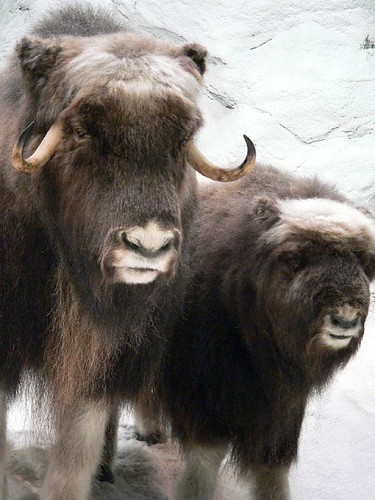
John Teal, a researcher whose work involved raising musk oxen (an endangered species), described that one time, he was sealed within the oxen pen when some dogs ran toward the outside of the pen. Immediately, the musk oxen snorted, stamped, and charged at John. He was afraid for his life but, to his astonishment, the oxen did not attack him. Rather, they formed a defensive circle around him, horns facing out, pointing at the dogs—exactly the same as they do when protecting their calves!


Wednesday, August 09, 2006

Bird Grammar


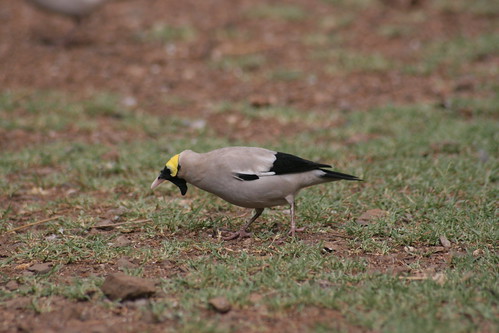
A study in the journal Nature by Timothy Gentner from the University of California at San Diego observed that starling birds can identify "acoustic patterns defined by a recursive, self-embedding, context-free grammar."

In other words, linguistically, starlings can discern between a basic bird song and one with specific inserted grammatical "bird phrases."

More details at the Deccan Herald.


Technorati Tags: , , ,

Tuesday, August 01, 2006

Feelings vs. Survival


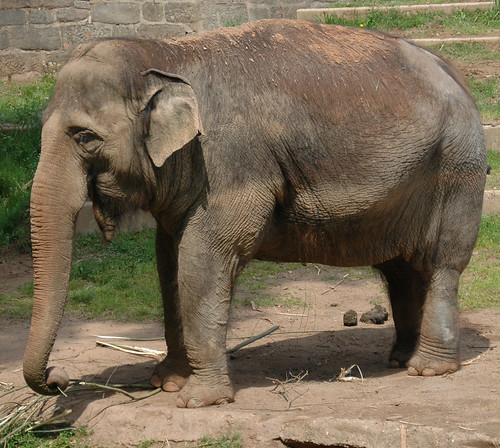
A park warden was watching a herd of elephants walk by when he noticed something. One of the adult females was very gently carrying a baby elephant who had clearly been dead for several days. When the herd stopped to eat or drink, the female placed the body on the ground next to her while she dined. After finishing her meal, she would pick up the calf and proceed to carry it to the herd's next destination. As one would imagine, the female's pace was slowed by the extra weight of the calf. Did the herd ever leave her behind? No. Instead, they walked slower, to accommodate the pace she was capable of maintaining. (When Elephants Weep, Masson and McCarthy, 1995).

Was the elephants' behavior in this situation a product of genetic survival, of some instinctive social urge? Or did the female adult feel sorrow and love for the deceased calf, causing her attachment to it? And did the rest of the herd respond with compassion by slowing their pace to accommodate the grieving female?

I'm not an evolutionary psychologist. I don't propose to be able to analyze and determine the survival value of the herd's behavior in terms of gene- or species-centered evolution. What I do know is that the behavior seen in the elephants is the same as we might see from a grieving human parent and her support network. Do we ever assume that the human parent acting in such a manner actually does NOT feel sorrow, but rather is just responding in an instinctual mode of survival?

The real question is, how much evidence do we need to accumulate to determine if a non-human animal experiences emotion vs. instinct? And, just as importantly, can we ever structure an experiment such that the results are definitive? And how do we know that, if non-humans feel emotions, that they are exact duplicates of our emotions—maybe they feel love, but it's different than our love. How can we even know that the romantic love I feel for my significant other is the same as the romantic love you feel for your significant other? If we can't really define the emotions we, as a species feel, how can we define the emotions potentially felt by different species?


Sunday, July 30, 2006

Animal Sacredness, in Response to a Comment


A good friend of mine commented on my post here, and so I'm posting my answer here. Here was the comment:
Mmm. What's your feelings on people's treatment of cockroaches when they don't go with the decor? :) Where does one draw the sacredness line on life?

I decide daily which lives around me will live, die, and how, and there's nothing anyone can really say about my choices without appealing to a Greater Principle.

Which is what ACS does daily, deciding whether a puppy should die rather than live a few months as a commodity.

Right?


Ok, first off, I admit that cockroaches rarely match one's decor. :) I think there are several issues to consider here. First, I think prevention is of utmost importance. There are recommendations out there that will help you prevent insect infestation. Proper prevention can go a long way toward eliminating having to make this decision at all. However, that's not always enough. So in the cases in which you find yourself living with a few cockroach friends, here are my thoughts.

Ideally, in the case of any unwanted house guest, one would do one's best to remove the guest without causing undue injury, releasing the animal outside. Unfortunately, cockroaches generally preclude this possibility. We all share this planet; but just as we would not be welcome in a lion pride's territory, cockroaches are generally unwelcome in our homes. Therefore, I understand the need to have them exterminated. However, I don't think that when we have to resort to extermination, we are necessarily drawing the line on sacredness of life at all. I admit that it is impossible not to kill every day. Every day in my life, I squish millions of small organisms as I walk. But in no way am I intending for this to happen. As a matter of fact, if it were up to me, I would go far out of my way to avoid killing any of them.

Just the other day, I was at the beach and there was this fly who kept landing on me. But it was the strangest thing—he woudn't fly away when I waved my hand at him, like most flies. He just stood there and let me touch him. I put my finger down, and he crawled onto it. I've honestly never seen anything like it before. After a while, he left, and I continued reading my book. A few minutes later I felt a tickle and I unconsciously swatted. Immediately, I realized what I had done, and I looked down and saw my little fly friend walking toward the shade with his right wing bent unnaturally back. A wave of sorrow and regret flooded over me for my lack of mindfulness. I had lost my concentration and swatted unconsciously, and it was 100% my fault that I injured the most peaceful fly I'd ever met. As he walked toward the shade, I remembered he would let me touch him. So I reached down and gently brushed his wing back to its normal position. It went back! But he continued walking toward the shade and, when he reached it, he just sat there. I felt sooo bad, just watching this fly. If he couldn't fly, he was going to die. I, honestly, could not go back to my book. I just sat there watching this fly. After about 3 minutes, he flew off! I was so relieved! That experience taught me a lot.

Back to our cockroach issue. If your house is infested, you have no choice but to exterminate them. They won't leave of their own accord, you cannot capture and release them (there's too many!), and they can impair your health. Thus, you have no choice. But there are an infinite number of mental states that can drive your decision to exterminate them. Many people, I expect, will simply call the exterminator without a second thought, and be glad that the roaches are dead. This view, I argue, is a case in which one does not view cockroach life as sacred. Me, personally, I would make that call with a heavy heart, and would be very sad at their death. I would perform my daily meditations keeping them in mind, wishing them well in their next lives. In my view, roaches are sacred, and I would treat them as such.

My friend said:
I decide daily which lives around me will live, die, and how, and there's nothing anyone can really say about my choices without appealing to a Greater Principle.

Yes, you do make those choices. But I'm not sure what you mean when you say there's nothing anyone can say about your choices without appealing to a Greater Principle. If you are trying to say something about a judgement of the ethics, or lack thereof, surrounding your actions, then that's something too long to handle in this post, but suffice it to say that such an article is already in the works. However, if you mean something else, I'm not following.

My friend said:
Which is what ACS does daily, deciding whether a puppy should die rather than live a few months as a commodity. Right?

Actually, no, not in the manner in which I think you are speaking. ACS will never euthanize an animal that is adoptable. What this means is that they will euthanize when an animal is very ill and is not going to recover, which in my view is a compassionate act. They will also euthanize an animal if it was, for instance, trained as a fighting dog and was not responding to rehabilitation, and was thus very dangerous to be around. That's it. Therefore, I don't think that what ACS does is "deciding whether a puppy should die rather than live a few months as a commodity." I think they do their utmost to keep animals alive and happy, and will resort to euthanasia only in the most extreme circumstances.

Thanks for the thought-provoking comment!


Saturday, July 29, 2006

Frightening Encounter at the Anti-Cruelty Society


My fiance told me this story over dinner this evening.

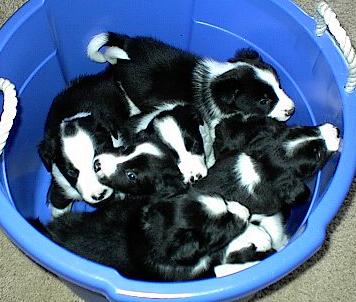
The Anti-Cruelty Society (ACS), where she volunteers, had a dog-washing fundraiser today, at which Jen was volunteering. The ACS has an attached parking garage, and after the dog-washing event, she and several other volunteers were taking the elevator down from the upper levels to the main floor when a woman who had just parked got on. She said she was to meet her daughter there, who was hoping to adopt a dog that day. Once the woman discovered that she was surrounded by volunteers, she asked them a question: "What is your return policy?"

To their credit, the volunteers handled the situation well, explaining that if the puppy became ill, she could obtain free vet care through ACS for the first 15 or so days after adoption. They also explained that, if something was truly problematic for her daughter with her new family member, ACS prefers that she return the dog to them rather than just releasing it or giving it away to somebody else. However, they diplomatically and subtly emphasized that having to return the dog was frowned upon because it, more often than not, signified an owner who was not serious about living with a pet.

I am appalled. And, as I found out from Jen, so were the volunteers. While of course there is a chance that, even with the most careful screening and love, a dog might be destructive or dangerous and not respond to training. In these instances, bringing the dog back to ACS is understandable. However, the woman's question belies her misshapen view of animals as commodities. You return a purse or a shirt or a stereo because something's wrong with it or you end up not wanting it. You don't "return" a fellow animal. Who among you would ask your doctor just after giving birth if you could give the baby away if you didn't like it or if it was too much work?

There are highly related questions that ARE appropriate and important to ask, such as, "What do we do if the dog becomes ill shortly after adoption?" or "What if he's having a behavioral issue that I am having trouble dealing with?" These questions are good to ask before adoption, and are coming from a mental state of love for the animal because they are focused on solutions for common problems—ACS can tell you about their vet care or about training options.

What worries me further is that the treatment of non-human animals as commodities is a pretty common view—Jen told me that she had read that a statistically significant number of people have given up their pets of several years to shelters with the reason, "She doesn't match our decor anymore." (sorry, I don't have a source link for this; it's hearsay)

We need greater educational systems in place to teach people the true value of life: non-human life is no less sacred than human life. This broad statement has many subtle implications and sub-points, and I can immediately think of a number of arguments that people I know would put forth to argue this point. That's a topic for another post. For now, just give some thought to our treatment of non-humans. Generally speaking, if you wouldn't do it to your own child, then you probably shouldn't do it to your dog or cat or ferret.


Friday, July 28, 2006

Emotional Lives of Non-Human Animals


In the wild, researchers were observing a herd of six giraffe when they noticed a lion stalking nearby. The lion pounced and the giraffe bolted. But one giraffe, a baby calf, was too slow. The calf's mother (the researchers had been observing this herd for quite awhile and were aware of the familial relations of the various giraffe) got behind the calf and tried to push it to run faster. Within a few strides, however, she realized this was not working, and she stopped, turned, and faced the charging lion. Lions regularly take down adult giraffe, so this was a dangerous act on the part of the mom. The lion circled the two giraffe, and the mother continued to face the lion as it circled, placing itself between the lion and calf the entire time. Any time the lion approached, the mother gave a violent kick in his direction, forcing him back to the perimeter. An hour later, the lion gave up and left, and the mom and calf rejoined the herd.

Was this an example of love? Most animal owners would answer "yes" in a heartbeat. But many scientists will say no, or say they don't know, either unwilling to allow that non-humans experience emotions or are simply not convinced based on current evidence. You might say that this reaction was the result of survival instincts in the giraffe. In that case, consider the following story.

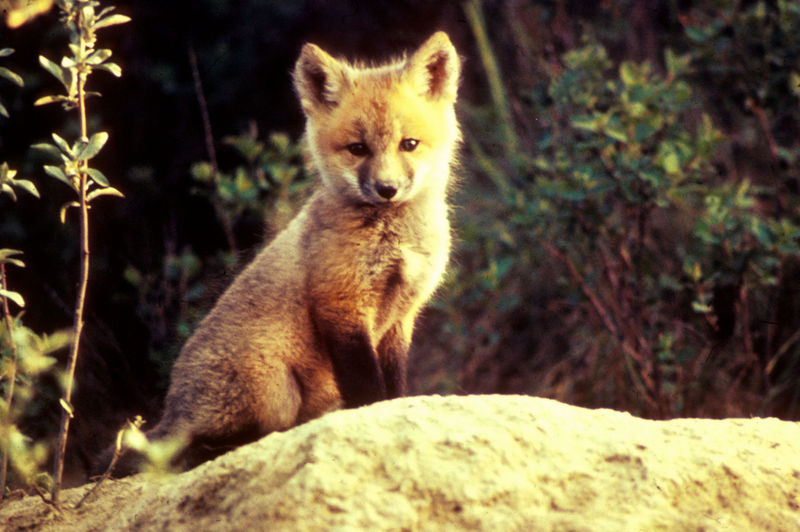
A male red fox named Smudge had a litter of pups with Whitepaws. Male foxes typically supply food to the female and her pups after birth, but otherwise leave the female alone in a den with the pups. Smudge did this with excitement, according to researcher David Macdonald, who was studying these foxes. However, as the cubs aged a bit, Smudge enjoyed playing with them. But this wasn't always allowed by Whitepaws or Big Ears, the pups' maternal aunt who also watched over them. Oftentimes, Smudge would approach the cubs to play, but the females would chase Smudge off. So what did Smudge do? He waited in hiding until the females fell asleep. Then the researcher watched Smudge sneak a little closer to the den and give a very soft warble. Within a few moments, the pups quietly tiptoed out of the den to their dad, and they proceeded to play. Of course, at some point the pups would make enough noise to wake the females, who promptly ran over and reprimanded Smudge. But this didn't stop Smudge. He kept sneaking play time with his pups whenever he could!

I'm reading this book entitled When Elephants Weep: The Emotional Lives of Animals (J.M. Masson & S. McCarthy, 1995) and these are only two of about fifty such stories I've already read, and I'm only on page 73 of 236. It's a great book that demonstrates (pretty conclusively in my opinion) that other animals experience emotions—it's not just impersonal instinct.

7/29/05 Edit:
Bill, at Integral Options Cafe kindly linked here and his comment there reminded me of something I had wanted to add to this post but forgot before submitting. He mentioned the anthropomorphizing of non-human animals, and as a matter of fact, that's exactly what the authors discuss in a well-written (and fairly long) first chapter in the book. They mention the scientific suicide that can often result by attributing even the slightest emotion to non-humans, and give many examples of such, including instances where an emotional word slips into an otherwise "objective" description, and instances where a scientist attributes some emotionality and is chastised bitterly for it. The authors' purpose in this book was to cull the scientific literature and present evidence based on all those studies (there are 32 pages of Notes at the end that cite the literature from which they draw their stories) that emotions are evident in non-humans. They argue (correctly in my opinion) that the main reason for the taboo against non-human emotion is the—conscious or unconscious—placement of humans as the pinnacle of creation/evolution (rather than the species that just happened to evolve the greatest complexity, today).* So while they are quick to point out that we don't fully understand emotional responses in non-humans, and their experience of love is probably a bit different from our experience of love, they argue that there is ample evidence that they do experience emotions and there's no shame in admitting such. Keep in mind that it's not anthropomorphizing if non-humans DO experience emotion.


*I mean, at one point in time, dinosaurs were the most complex creatures on the planet and were the "pinnacle of creation/evolution." Look what happened to them, after which small mammals were given the chance to evolve, eventually resulting in us. But once we go, something else is bound to take our place. Perhaps the reptiles will have their revenge! :)